
Thursday, February 5, 2015

Do You Hear What I Hear?  
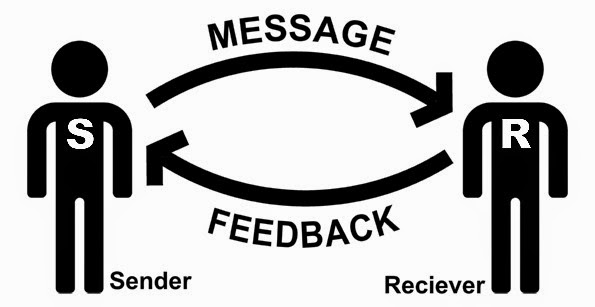


Or, How Are Your Business Communication Skills? 
Business is all about relationships and relationships depend on communication. Communication isn’t just about talking, it’s also listening and verifying that those in the conversation are “hearing” the same meanings.   
If you’ve ever been in a situation where someone misinterpreted what you said, you’ve experienced a communication challenge. Communication skills can be learned or improved, but the first step is awareness. Listen first to yourself, what you say and how you say it.  Are you choosing the best words for your purpose? What tone are you using and what’s your body language conveying?  You might want to try asking the other person for feedback or to repeat back to you what they heard using their own words. This not only helps you know if you are being clear, it tells you how differently others can interpret your choice of words. You may discover clues to how you can improve your language and other communication skills.  

Second, listening to others is vital to good communication, because it accomplishes the most fundamental communication tenant, which is to know your audience. STOP thinking about what you want to say next, just listen. When you listen intently, you can learn a lot about the other person’s purpose and point of view. This can make it much easier to understand them and in turn communicate back to them successfully. If you find yourself confused or are not comfortable with how you interpret their intent or their conversation, stop and repeat back to them what you heard in your own words. It’s the quickest way to make sure that you both understand each other. Understanding is the common denominator of good relationships.   

Monday, January 26, 2015

Elevating Your Speech.


You may already know that the term “Elevator Speech” refers to the powerful and succinct way you introduce and communicate the value of your expertise in conversation or when presenting yourself professionally. 
Do you know why it’s called an “Elevator Speech”? The scenario to imagine is that you and an influential person you want to impress find yourselves alone together in an elevator. You have only 60 seconds to engage and pique the person’s interest in you. If you aren’t successful, when the doors open you lose the golden opportunity, forever. How do you present yourself, what you do and why they should care in a way that makes them want to continue the conversation?  
Your 60-second speech can change based on where you are and to whom you are speaking, but there are always two important aspects to consider. One, among those who do what you do, what makes you different or special? Two: how can you help the person you are speaking to relate what you do to something of value to them. That second consideration means that your speech needs to be flexible, 
because the most important aspect of communication is to know your audience. Have you ever spoken with a person in a technical profession who uses jargon and terms that are a mystery to you? It’s the quickest way to lose your audience.  Some people really aren’t knowledgeable about the actuarial profession. In that case, you can supplement your explanation with a real-life example. That will help them begin to think about how they might help you. In addition to the explanation, you can then say what makes you and your skills standout from your peers and the impact that has on those you help.  

Taking time to craft your 60-second introduction can really help you on a job interview as well, because knowing and articulating your value is essential to a winning interview. Two more thing to remember: practice your spiel and always be authentic. 

Wednesday, December 3, 2014

How to Find a Mentor 


Before you strike out and look for a mentor, make sure you are clear on why you want and need one. Many people are ready willing and able to help, but the ones who will be good mentors will want to know that you have a clear agenda or need and thatyou are ready to work on it.  
When you can clearly communicate your goals, you are ready to find the right person to help you. If your company has a mentoring program that is a great place to start. If they don’t, you can consider professionals in your industry, people you may have met through associations or networking events. Don’t rule out your neighbors or relatives if they are successfully experienced in the areas you feel you need help with.  

When you approach your choice of mentor, treat your presentation of the idea as a conversation about your challenges and your desires to excel. Presenting both will allow that person to experience your sincerity, and know that you are good a good mentoring candidate. They may even begin to offer ideas on approaching your challenges before you ask for their help.  One reason you may be refused is the mentor’s lack of time. If you can define how much time you are asking for, it might make the difference. A reputable actuarial recruiter can also offer you perspective on industry trends and your professional goals. A good recruiter is one mentoring relationship that can last for your entire career. 

Tuesday, November 25, 2014

Have You Considered A Mentor?  


A mentor is an experienced adviser and supporter. Wouldn’t it be great to have one for every area in our lives? In your actuarial career, when you are starting out, a mentor can help you to understand and navigate the structure of an organization, and recognize how to advance your career within that system. 
Your mentor’s experience can provide you with a perspective you simply aren’t seasoned enough to see. The benefit is that in a new position, you can get an insider’s view on how to get things done and be noticed in the process. 
Mentors can help you gain self-awareness, by asking tough questions that will challenge you and help you define a career path. Having a resource and sounding board in your corner can be valuable in resolving ethical dilemmas or in taking calculated risks. The right person will see your strengths and help you to use them to your best advantage, while helping you see and mitigate the impact of weaknesses. A strong mentor can actually help you see career opportunities you might not otherwise consider, and inspire you to reach higher than you might be comfortable doing by yourself. 
A reputable recruiter can also be a mentor in helping you stay connected with the actuarial marketplace and defining, finding and pursuing your next position.

Wednesday, October 22, 2014

Not seeing results from your job search? 


Albert Einstein said, “Insanity is doing the same thing over and over again and expecting different results.” If you are getting the same feedback from every interview and not getting an offer, you need to take a hard look at your interviewing skills. Assuming that you dress appropriately, arrive on time, leave your cell phone off, have researched the company, or haven’t talked too much or too little, perhaps you’ve overlooked these other influencers:

  • Are you overqualified? Or under qualified? Hiring companies can view both ends of the spectrum to be a red flag. 
  • Is your availability limited? Perhaps overtime or some travel is required, which doesn’t fit your ability to commit. 
  • During the interview, do you display interest in the actual work, rather than just the paycheck and benefits?
  • Do you have good answers to the interviewer’s questions? Do you have some questions of your own? Nothing shows interest like asking intelligent questions. If you don’t know any, practice with your recruiter. 
  • Did you get the feeling that you would fit well into the company? It isn’t always about skills, it can be about fitting into the culture. 


Preparation is key, as is follow up. Nothing says you appreciate their time like a handwritten note. 

Friday, October 3, 2014


Job Hunting When You Are Unemployed?


Job hunting is always challenging, but it can be more difficult if you’ve been out of work 
for a while. You’ve heard it said, “The best time to get a job is when you have a job.” 
That  seems  to  be  true.  Is  it  due  to  the  job  seekers  mindset  or  the  mindset  of  the marketplace?  

The good news is that in the current marketplace, the stigma of being unemployed has 
all but lost its sting. But, when you need employment, the pressure is on, so you might 
be looking at a broader spectrum of opportunities or be considering taking a step back 
in order to get back to work. That’s a good fall back strategy, but beware of applying for positions that are outside of your skill set. Before you go that route, give some thought to how that would look from the hiring managers’ point of view. If your background and the job description don’t really match, would you consider yourself a good fit for the job? 

A  reputable  recruiter  can  guide  you  and  offer  a  perspective  you  don’t  have,  while helping you to find the right opportunity for you. 

Thursday, September 18, 2014

What Can You Learn When Things Don’t Go Well? 
From Patty Kent, Executive VP, Actuarial Careers, Inc. 


    You leave the interview and you know it just didn’t go well, but you really aren’t sure why. If you are not working with a recruiter, you will likely never know what went wrong. If you are, this is a golden opportunity to use the interview as a learning experience.   

    In following up with the hiring company, your recruiter will hear the feedback from the interviewer and share it with you. Negative feedback is never easy to hear, but if you remain open to suggestions and are able to hear the information and learn from it, you will know what you need to work on to do better the next time.  

   Continue the conversation on our Facebook Page or LinkedIn Company Page!